
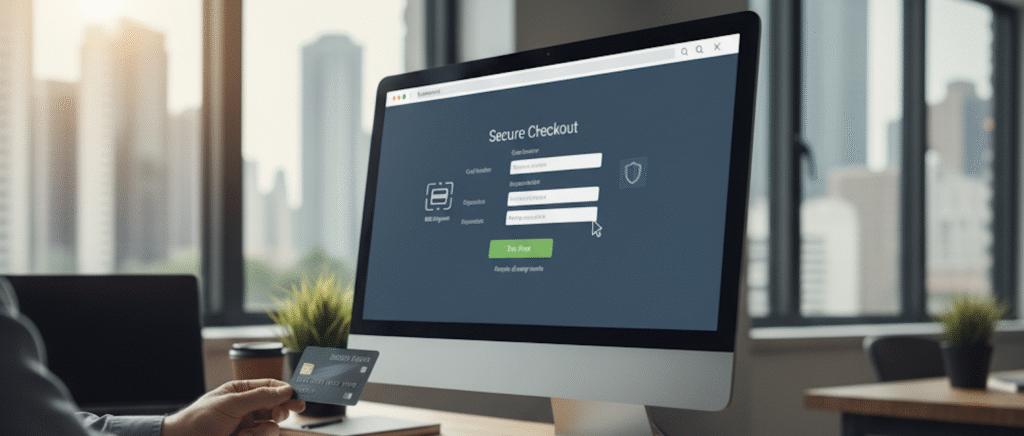
When you’re running a B2B company dealing with five-figure invoices and net-60 payment terms, credit card processing fees can feel like an unnecessary expense. Why pay 2-3% when you could simply accept wire transfers or checks? It’s a reasonable question—but it’s also the wrong question to ask.
The real question is: how much business are you losing by not accepting credit cards?
The B2B payment landscape has changed
While credit cards have been around since the 1950s, starting with the Diners Club card and evolving into today’s Visa and Mastercard networks, their role in B2B transactions has exploded in recent years. We’re not talking about small purchases anymore. B2B buyers are increasingly putting major investments on corporate cards, and they have good reasons for doing so.
Your buyers want:
Payment flexibility
The ability to leverage credit lines and manage their own cash flow timelines rather than being locked into your payment terms.
Rewards and benefits
Corporate cards offer cashback, travel points, and purchase protections that add real value to every transaction.
Immediate transaction completion
The convenience of closing deals instantly rather than navigating approval chains for wire transfers or waiting for checks to be cut and mailed.
More importantly, they want the convenience of completing transactions immediately rather than navigating approval chains for wire transfers or waiting for checks to be cut and mailed.
The real cost of saying “no” to credit card payments
Here’s what many B2B merchants miss: when you don’t accept credit cards, you’re not saving money on fees. You’re losing sales entirely.
A real-world scenario
A potential buyer is ready to place a $50,000 order with your manufacturing company. They want to pay with their corporate credit card to manage cash flow, consolidate expenses, and earn rewards.
But your company only accepts ACH payments. Now the buyer has to:
- 1.Route the purchase request through procurement or finance
- 2.Wait for internal approval (which can take weeks depending on PO workflows)
- 3.Collect and verify ACH banking details
- 4.Schedule and initiate the ACH payment—often tied to a weekly AP run cycle
Meanwhile, another manufacturer who does accept credit cards closes the deal the same day.
Research shows that businesses refusing credit cards miss out massively in annual sales. In the B2B space, where individual transactions are larger, each lost deal hurts even more.
Five game-changing benefits for B2B companies
1. Accelerated cash flow
In B2B, waiting 30, 60, or even 90 days for payment is standard—but it’s also brutal for cash flow. Credit card payments flip this equation entirely.
Instead of waiting months for a check to arrive and clear, you receive funds within one to several business days
For B2B companies managing large operational expenses, this transformation in cash flow can be the difference between thriving and merely surviving.
2. Reduced risk and stronger security
Bounced checks and disputed invoices cost B2B companies significant time and money. Credit card transactions come with built-in authorization—you know immediately whether the payment will go through.
- ✓Instant payment authorization and verification
- ✓Documented authorization records for every transaction
- ✓Card network dispute resolution process
- ✓Protection against bounced payments
This is far superior to chasing down unpaid invoices or dealing with insufficient funds.
3. Competitive positioning
Your competitors are already doing this. While small businesses lag in credit card adoption, forward-thinking B2B companies recognize that payment flexibility is a competitive advantage.
When you’re competing for a major contract and your competitor offers more payment options, you’re already at a disadvantage. Accepting credit cards signals that you’re a modern, customer-focused operation that understands how businesses want to transact.
4. Larger transaction values
Studies consistently show that customers spend more when paying with credit cards versus other methods.
In B2B contexts, this might mean buyers are more willing to upgrade to premium packages, add additional services, or make larger upfront commitments when they can leverage their credit lines and manage their own cash flow more effectively.
5. Valuable business intelligence
Credit card transactions provide rich data about purchasing patterns, seasonal trends, and customer behavior. This information is gold for B2B companies looking to optimize their offerings, predict revenue, and understand which products or services resonate most with different customer segments.
Addressing the elephant in the room: fees
Yes, processing fees exist. On a $50,000 transaction at 2.5%, you’re paying $1,250 in fees. That’s real money.
But consider what you gain:
- •Immediate payment instead of 60-day terms (the time value of money matters)
- •Eliminated risk of non-payment or bounced checks
- •Reduced administrative costs chasing invoices
- •Higher conversion rates and larger deal sizes
- •Competitive advantage over businesses that don’t accept cards
When you run the numbers holistically—factoring in faster payment, reduced collection costs, and increased sales—credit card acceptance typically more than pays for itself.
The surcharging solution
Modern payment providers offer compliant surcharging programs
These programs pass processing fees to the customer, allowing buyers to enjoy the convenience of paying by credit card while covering the associated costs themselves. This eliminates your processing fee burden while still providing payment flexibility.
Learn more about compliant surcharge programs for B2B merchants.
The future is already here
With approximately 85% of adults in the US and Canada holding credit cards, and card payments expected to continue growing, the question isn’t whether to accept credit cards but how quickly you can implement it.
Younger decision-makers entering B2B purchasing roles have grown up in a digital-first world. They expect seamless, modern payment options.
The business landscape is evolving rapidly:
- •E-commerce platforms making B2B ordering as easy as consumer shopping
- •Mobile payment solutions enabling purchases from anywhere
- •Contactless transactions becoming standard
- •Virtual cards and automated payment reconciliation
Companies that position themselves to meet these changing expectations will capture market share from those clinging to outdated payment models.
Making it work for your business
The key is partnering with a payment processor that understands B2B needs—one that offers competitive rates for larger transactions, compliant surcharge options, and responsive support when you need it.
Look for providers that can:
Handle your transaction volumes
B2B transactions are often larger and less frequent than consumer purchases. Your processor should have experience with high-value transactions and appropriate risk management.
Integrate with your existing systems
Seamless integration with your ERP, accounting software, and e-commerce platforms reduces manual work and errors.
Provide security and compliance
PCI-DSS compliance, tokenization, and fraud protection that safeguards both you and your customers.
Offer Level 3 processing capabilities
Access to the lowest possible interchange rates through Level 3 data submission can save thousands on B2B transactions.
The bottom line
In today’s B2B marketplace, accepting credit cards isn’t a luxury—it’s a fundamental business requirement. The companies thriving in this environment aren’t asking whether they can afford the processing fees. They’re asking whether they can afford to turn away customers who want to pay with plastic.
The fees are real, but so are the millions in missed sales that businesses leave on the table annually by not accepting cards.
For B2B companies with high-value transactions, each missed opportunity can be devastating.
Your competitors are already saying “yes” to credit cards.
Your customers want to use them.
The only question left is: when will you start accepting them?
Ready to start accepting credit cards and stop losing sales?
Disclaimer: Payment processing fees and capabilities vary by provider, industry, transaction volume, and specific business circumstances. The examples and figures provided in this article are for illustrative purposes. Consult with qualified payment processing professionals to determine the best solution for your specific B2B payment needs. Information current as of December 2025.